
[Part 3/3] My First COVID Side Hustle
[9 mins] This is the final part of a 3 part mini-series about my first side-hustle during COVID. Part 1 and 2 provide additional context, but are not required to understand Part 3.
A sad start to the year led me to find distractions by flipping dumbbells (Part 1), which then parlayed into me converting my garage into a professional home gym (Part 2). I feel immense joy when starting a side hustle. This series is one of the dozen side hustles I’ve written about, but not published. Today, you’ll learn about one called FitPad - and it’s one of my favorite.
It’s Fall of 2020. I’m working out in my garage that I converted into a gym in Atlanta. As a reminder, this was my old workout setup:
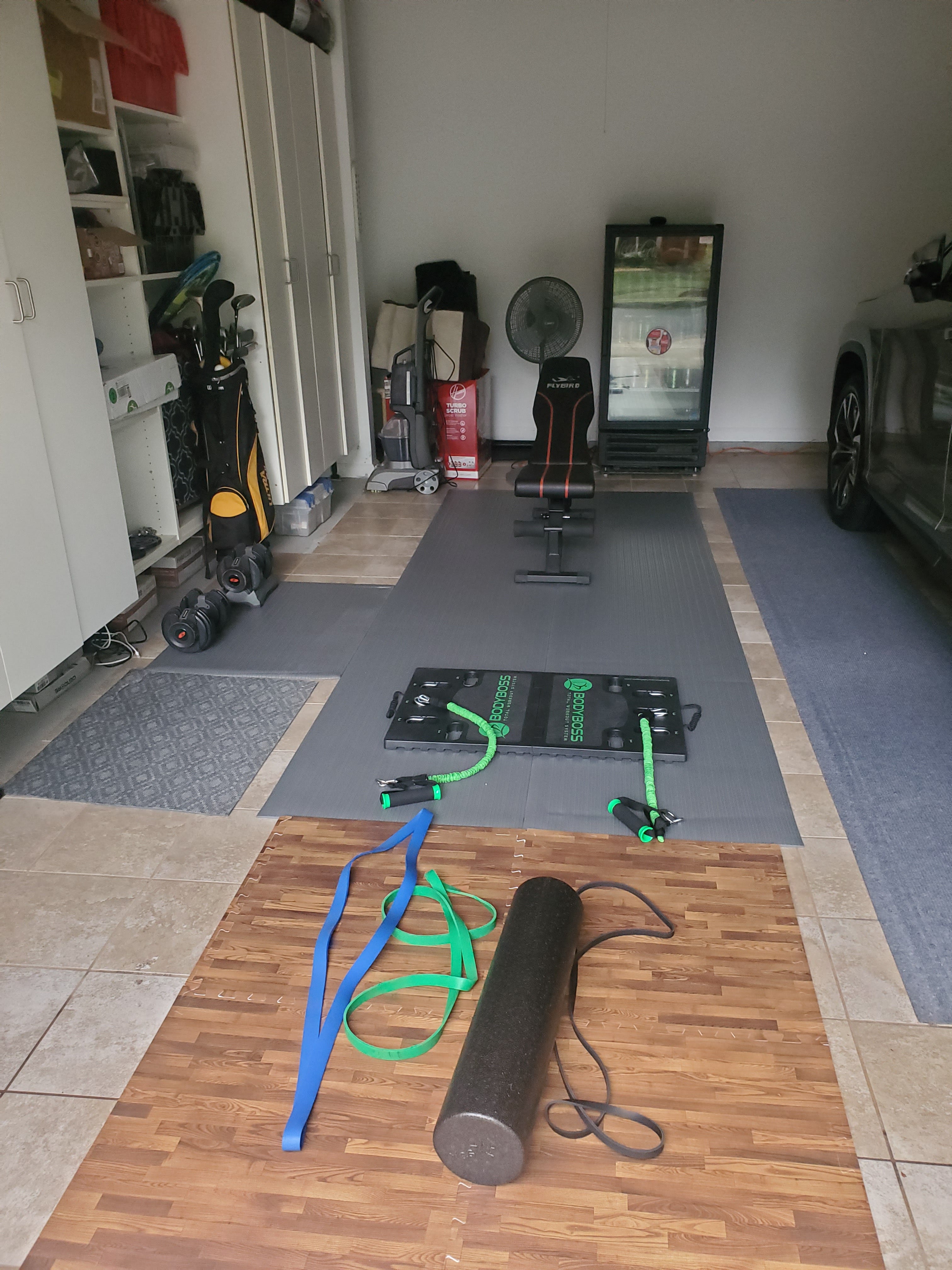
But now, I’m so proud of the renovation that I often leave the garage open for neighbors passing by, which leads to a few of them asking me to use it.
When they use it, they rave about their positive experience. They confide about how tough it’s been to find a good gym because COVID has shutdown their gym. This gives me an idea: what if I could lease my gym out? No monthly subscription, just a flat fee, and anyone can come and use it. Yes, another side hustle - let’s go!
Step 1: Polish the gym
I added towels, a motivational poster, mirrors, a sign from Etsy, a TV, a speaker, and filled a leftover cooler with drinks.
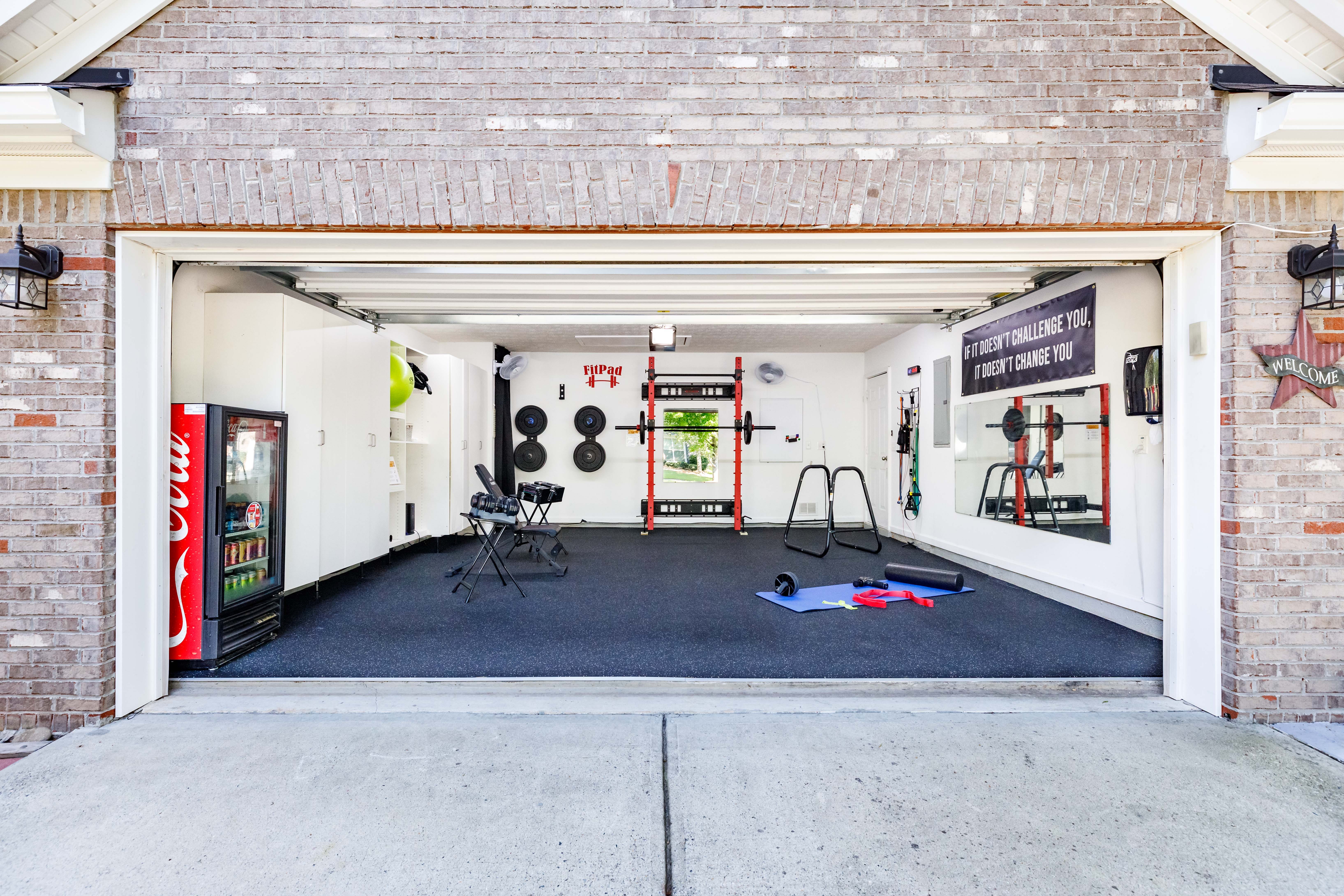
I try testing this offline first. Which means I had to do the thing I hated the most: door-to-door sales. This is where my brother really helped me. He has NO trouble with this. I, on the other hand, was traumatized from selling knives door-to-door for a MLM company as one of my first jobs as a teenager. We print flyers. My brother takes the flyers in one direction, while I lie and about going the other direction:
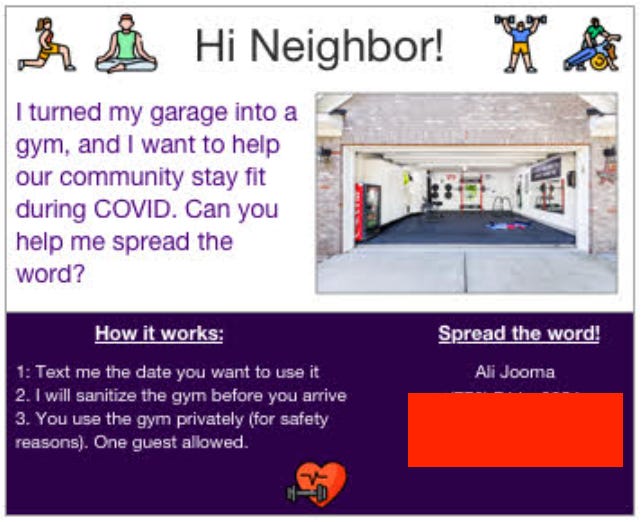
For people that are coming to use it, I ask them, “how much would you be willing to pay for this?” After some very informal, qualitative surveying, I land on $7/hr. My eyes turn green!
At $7/hr, assuming I can get 4-5 customers a day, that’s ~$12,000/yr in passive income. And that doesn’t even include any future upsells I might do for drinks, etc. I’m going to be rich!
Step 2: Brand it
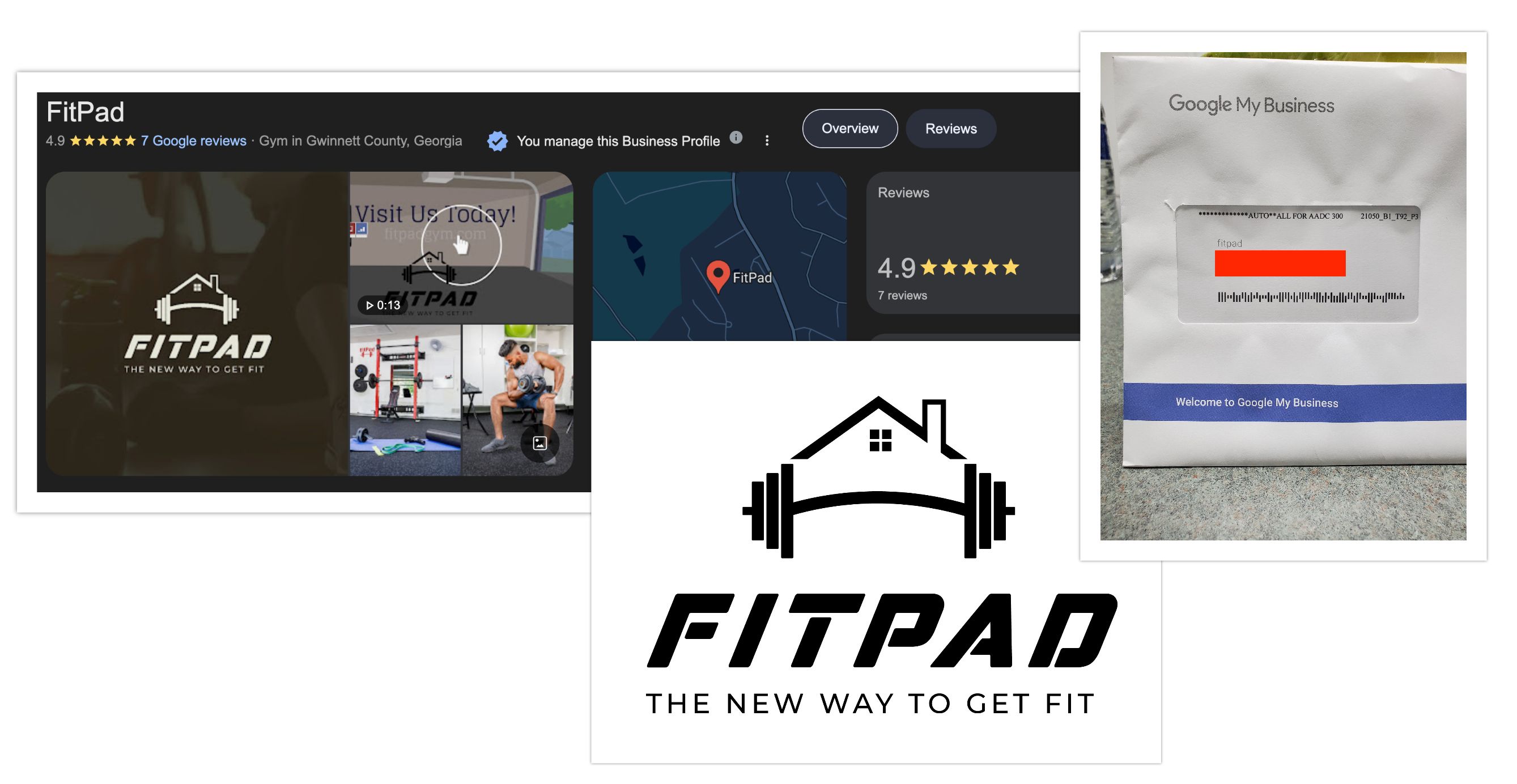
Okay, so I need to make this legit. I need a website, a brand, etc. right? After all, will they book this if it doesn’t seem legit? Snagged the domain fitpadgym.com, a contract designer for a logo, and signed up for Google My Business:
These were the days before AI apps could whip up a high fidelity website. So, next, I found a developer on Upwork who builds me a great website on Wordpress:
Alright, let’s make this more professional. I’m asking my fit friends to come over and and do some photoshoots in return for free gym usage:
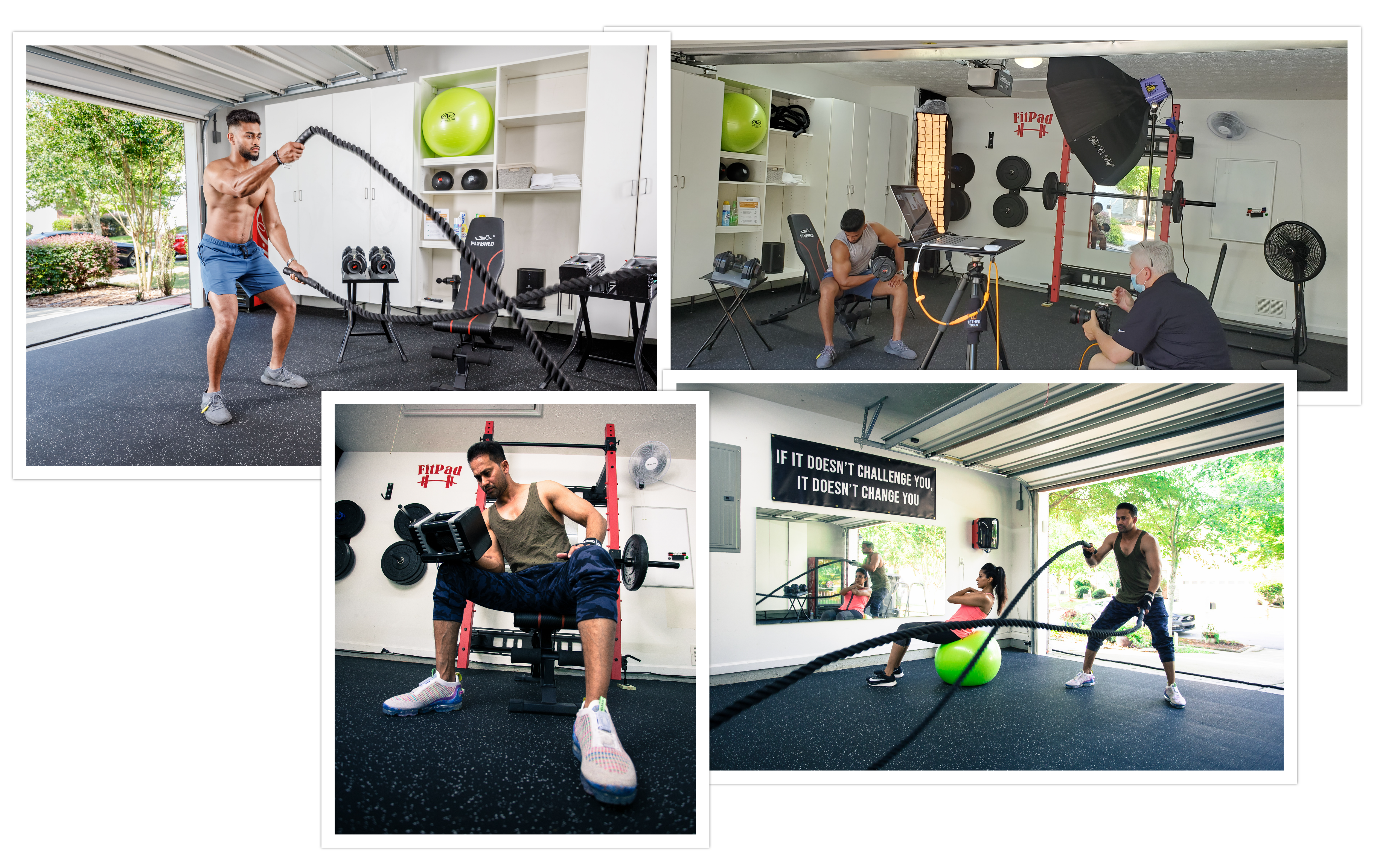
Lastly, I need to get the word out. Creating an FB/IG page, making creative, posting on socials (very unlike me), and even running ads. It’s game time!
Step 3: Executing
It’s legit, but now the execution starts to run into some very real-world problems.
First, how will I allow them access in and out when I’m not home? I need an app, right? And something that connects bluetooth to location to something else. That’ll cost a fortune, but that’s the next step right? Wrong.
This is where my friend Adam steps in: he’s one of those 10x engineers that (thankfully) put a damper on my plans to build an app for this. At the time, I was sad about this reduced scope, but in hindsight, he saved me a lot of time & money.
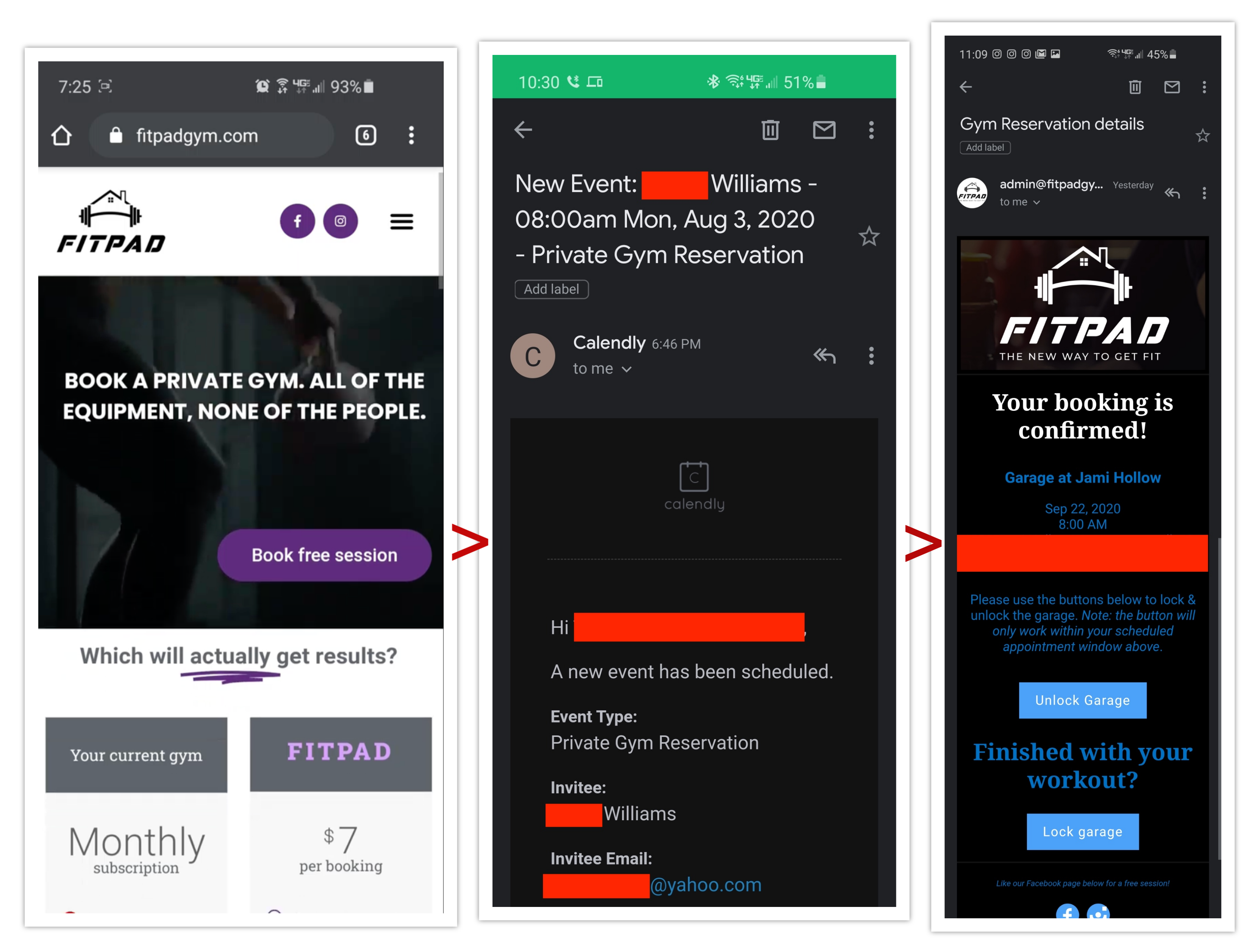
He suggested we simply connect a smart garage opener to a backend service that he would build. In practice, this means a user clicks a button in their email (say, a booking confirmation email), and then the garage opens or closes. Simple and effective.
So now the flow was easy: go to the website, book a slot via Calendly, receive an email, and open the garage at your allocated time (+/- some grace window):
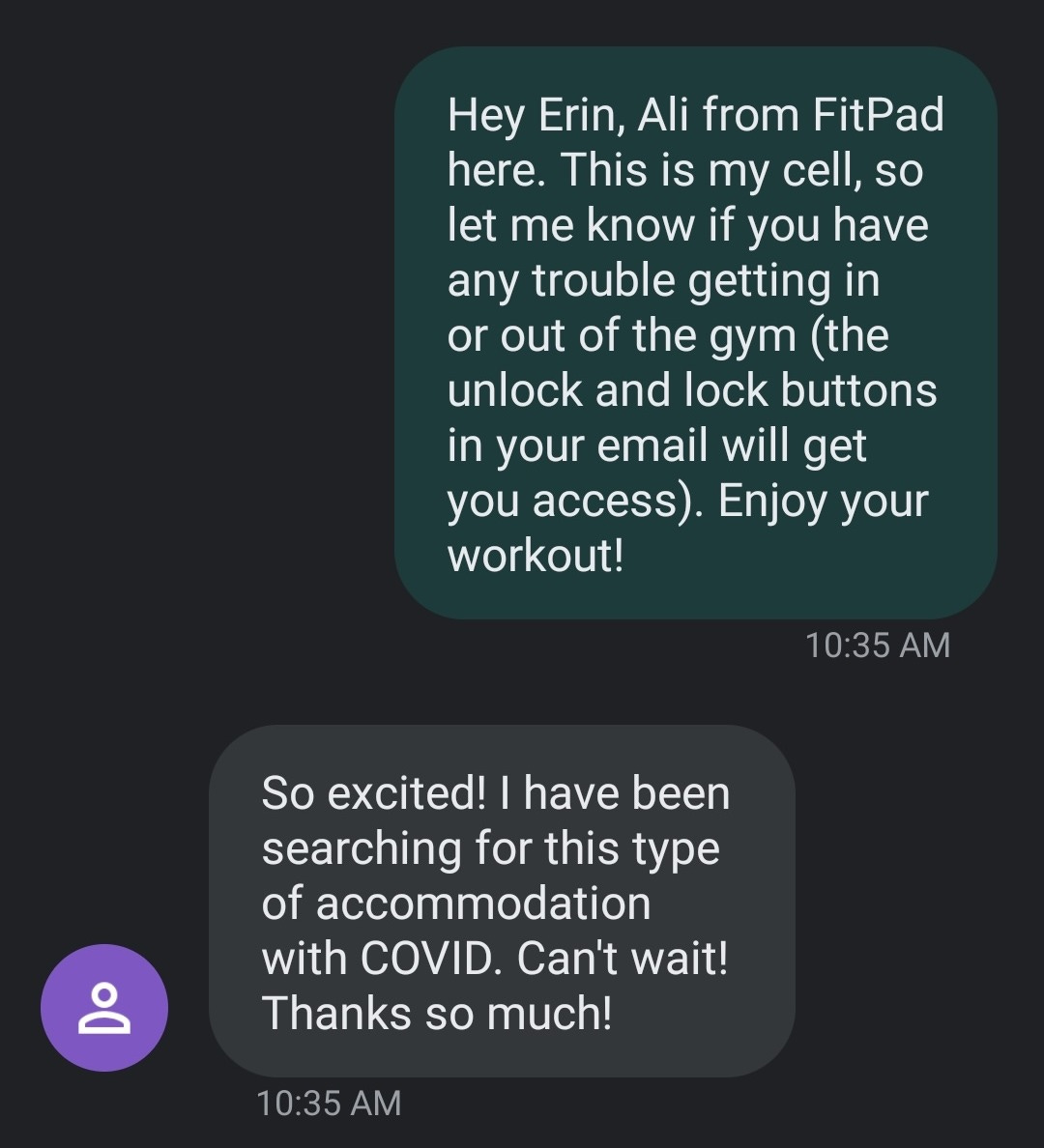
Just got my first booking..and another. It’s going well. Some customers are ecstatic:
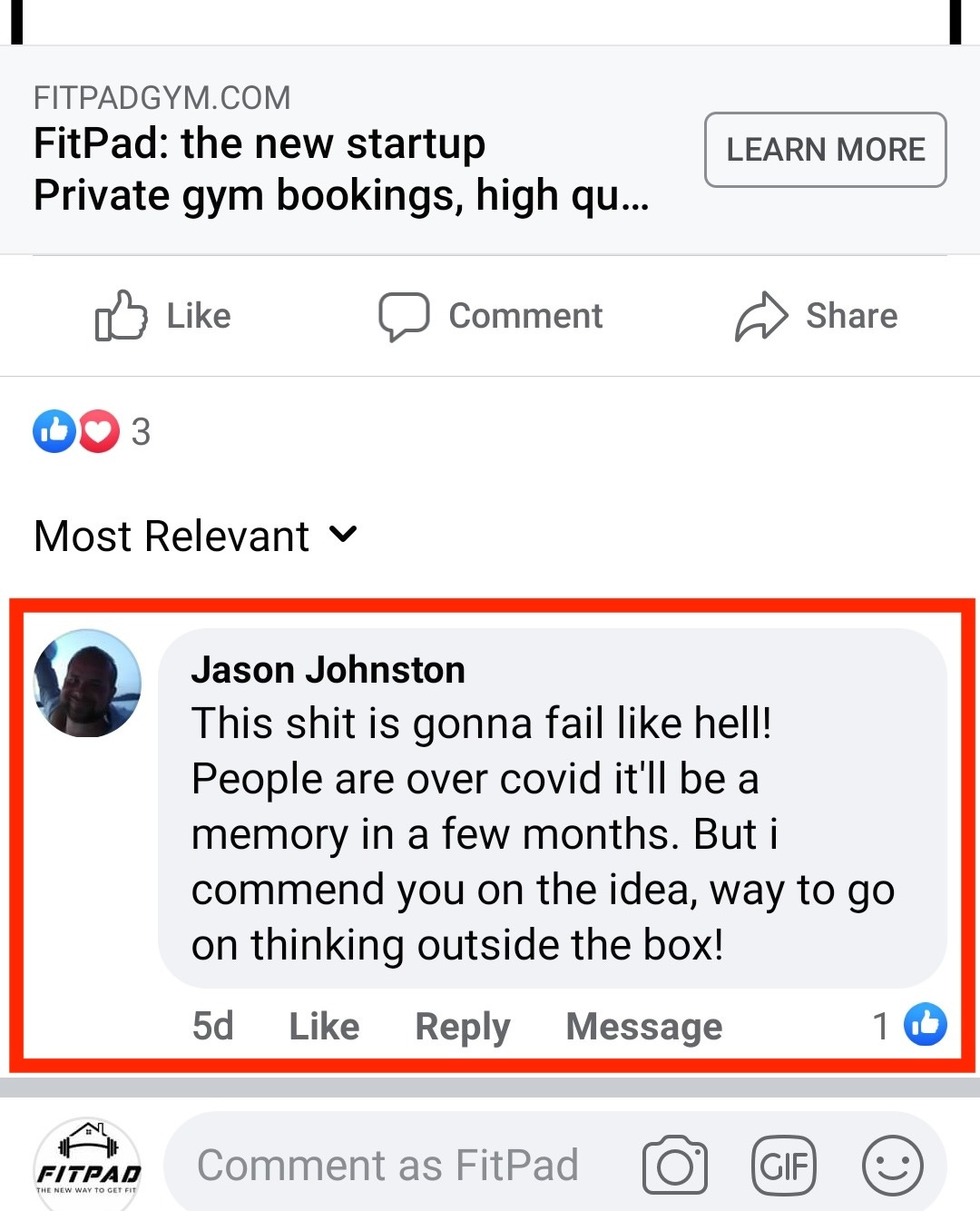
And in every business, there will always exist a Jason. It’s very important that when this happens to you, you simply think “fuck that guy”:
In tracking back through my photos, I’m reminded that I have the absolute best set of friends supporting me, encouraging me, and even posting for me. THIS is probably the biggest competitive advantage and it’s a bit sad that I sometimes forget it:
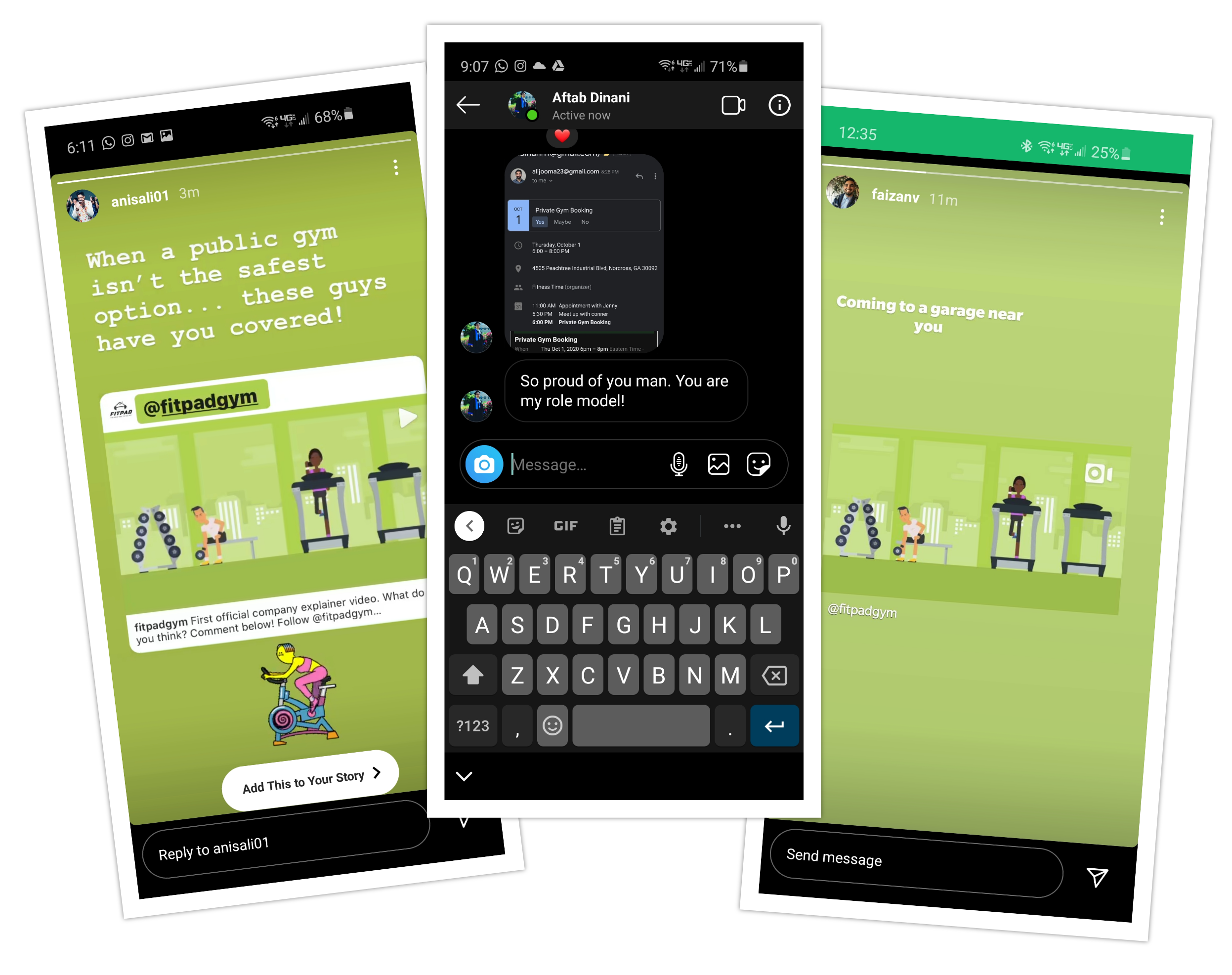
Fast forward, a few bookings are coming in, but no customer is repeating, despite leaving me a positive review online. And this makes the Product Manager in me wonder: Was it the price? Technical difficulty? Luckily, I’m small-time, so I can simply ask them. Their response caught me off guard. They loved coming, but it was too far out of the way.
They wished they had a garage gym closer to them. Hmm..I guess I could find and convince other garage gym owners in the Atlanta area. That could solve this. But if that’s the case then.. What if the idea is even bigger than I thought?
What if.. instead of renting my own, single garage gym, I could give everyone in my city..no my state..no, the whole country access to their nearest garage gym? Yes - that’s the new plan! I will build a marketplace that connects gym-owners to gym-seekers and take a middleman fee. This is brilliant and I’m ready to do it: I will build the Airbnb for garage gyms!
Step 4: Scaling
This is where I go down a rabbit hole of learning marketplace business. I binge YouTube videos from early founders, read YC blog posts on the “right” way to launch, and tear through case studies on companies like Uber, Airbnb, and DoorDash. Even my daily podcasts shifts. Suddenly, I’m listening to How I Built This from Guy Ruz, trying to understand growth hacks, and listening to how early companies toed the line in support of “growth at all costs.”
I knew that convincing many gym owners to trust me to host their garage on my platform was going to be hard, and even harder with COVID spreading. But reading about growth hacks from Uber inspired an alternative: I won’t convince them, I’ll just..add them to the platform and see what happens. Best case, I get a ton of bookings and my ask is stronger: “hey, here’s some in-advance revenue.” Worst case, I’ll use the booking data to see which owners I need to approach. Worst worst case, they call me very angry. It’s fine.
Boom. Overnight, I added several gyms to my platform! They were fake, of course, but that’s okay. In product, we call this a painted-door test. The point isn’t to get the revenue. It’s to test hypotheses quickly and learn. After all, I’m no longer chasing $7 per booking. I’m now working to create a $700M platform business enterprise.
After after putting other businesses on the platform, what happened? No bookings. Not a single one. Quite sad. But the silver lining - it was enough to reject the hypothesis that my problem was “location proximity.” It was time to move on to the next hypothesis and growth hack. I was quickly hooked by this. And I felt immensely alive at this stage of life.
I had a feedback board in the garage, where gym goers could write about their experience. One day, after cleaning the gym, I remember reviewing that whiteboard and seeing a new entry:
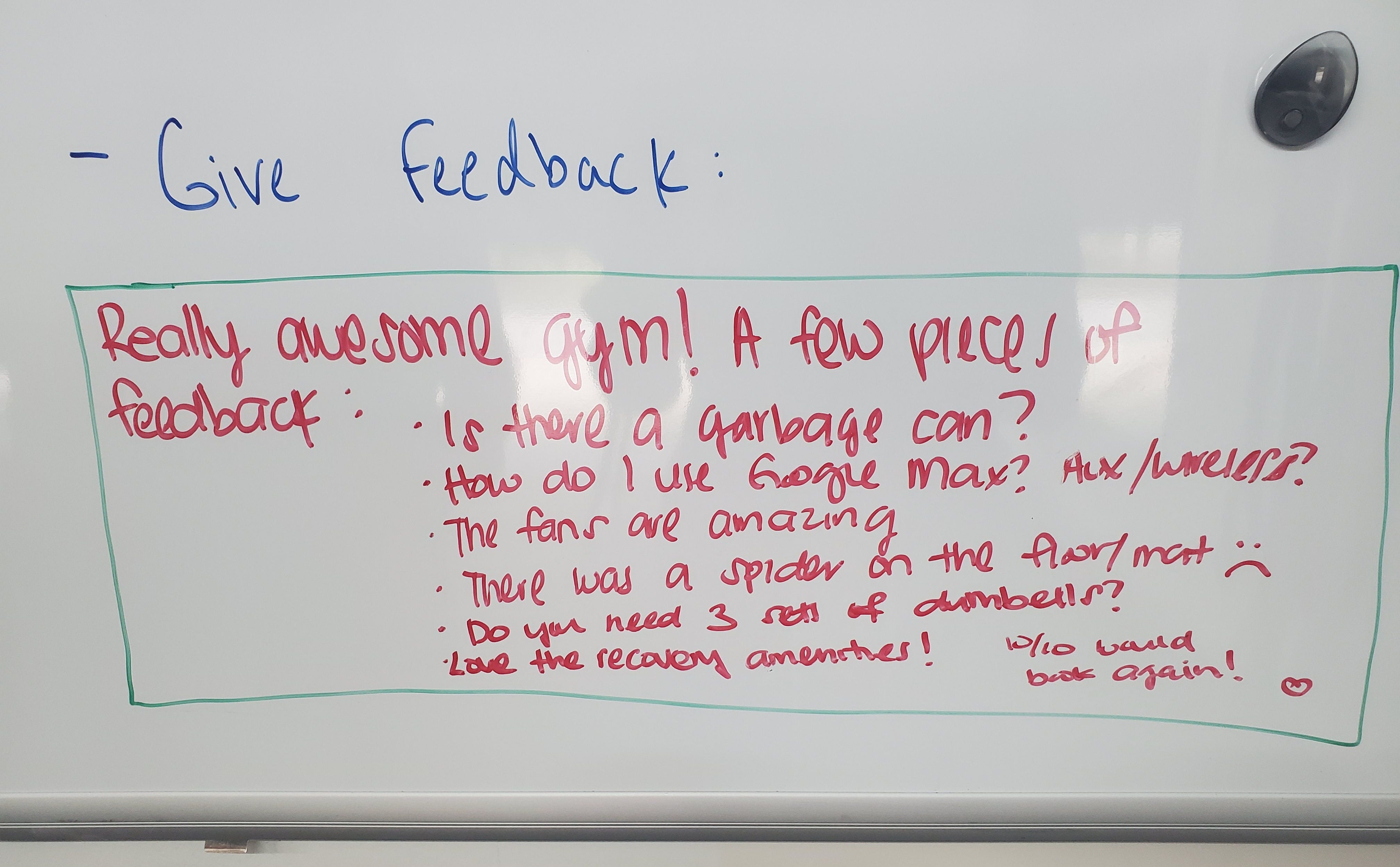
For me, what was most important wasn’t the feedback itself. It was how I felt in this moment. I felt seen, I felt purposeful, and most importantly, I felt..alive. I distinctly remember the feeling of canceling a meeting at my day job because I wanted to run to Home Depot to quickly solve a feedback from this side hustle.
Looking back at this today, it’s those moments of joy that give me the conviction to say that I enjoy the process of building, irrespective of the outcome.
Step 4: Growth
I kept going with FitPad for a little bit. Tried many growth hacks: some worked, most didn’t.
But by now it’s the Fall of 2020 and things in my personal life were shifting, this time for the better. My relationship was strong and the world slowly started to re-open. It felt like we, as a society, finally accepted that COVID was here to stay and it was less about “if COVID” and more about “how to manage through COVID.”
The real estate market was also interesting. Interest rates had just plummeted to near zero, but asset prices were also falling. There was this looming question of “is remote work the new norm?” And in major urban cities like SF & NYC, there were no shortage of articles like these:
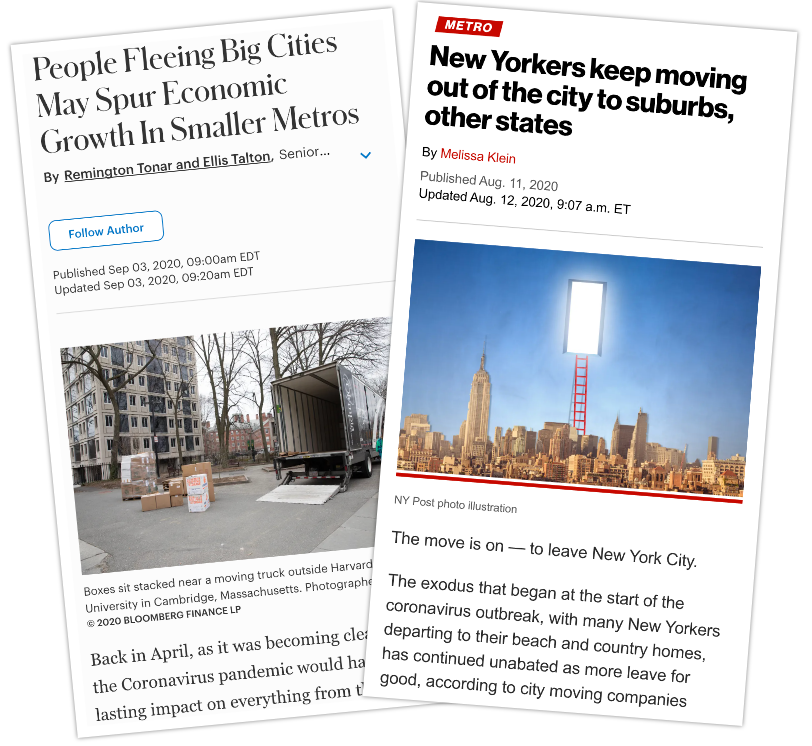
Naturally, that peaked my interest. Was this an opportunity to move back? Or, would that be the worst possible decision? What a crossroad.
On one hand, I knew I could figure it out if I wanted to. I rarely “fail” when I’m determined. At worst, I learn. And this chase..felt good. I was spending more energy/time on this side hustle than my day job. Maybe blindingly so; I wasn’t even nervous about gym starting to re-open because I was chasing a huge idea.
But on the other hand, I could move back to SF with an opportunity to buy a ‘discounted’ home at a 2.6% interest rate, ask my gf to move in, and be around friends again. And admittedly, I was getting a little tired of being in the same home with family during COVID. While building FitPad itself was energizing, there’s not much to do in suburbs of Buford, GA.
In the end, I chose SF. I wish I reflected more at this phase in my life. Because in writing this, I’m not sure exactly which factor drove me to SF: money? love? escaping COVID suffocation? cutting my losses with FitPad?
Probably a combination or maybe I’m just rationalizing. Either way, that’s enough therapy for today. That’s my 1st year of COVID.
Do you enjoy these short side hustle stories? I’m debating about how many more to share vs. going back to writing about real estate. Message me and lmk.
For those more interested in what I learned, business wise, here are some top lessons from this experience:
Lesson #1: What people say they’ll pay for, and what they’ll pay for are very different. How much revenue did I make? Total revenue: $21. Yes, you read that correctly. I had 3 total customers. Getting product validation and monetary validation are distinct steps. I saved SO much time not focusing on location, despite multiple customers telling me that was a blocker.
Lesson #2: Stop building, start selling. Even moreso today, the ability to spin up a website is very easy. The ability to convince someone to put their money towards that product/service is hard. I may write a future article on “how to create a side-hustle” that underscores this lesson because it’s where I see most entrepreneurs fail: they think/build too much, too early. Big trap.
Lesson #3: The right support system can make or break not only the success of the business, but your own mental will to pursue it. I had a great set of friends, parents rooting for me, a supportive partner, and even mentors at my day job helping advise me on this. I felt truly unstoppable.
Oh and if you’re still following along, here’s a throwback video/soundtrack I made for myself about the transformation of the gym: